Make It for the People in the Room
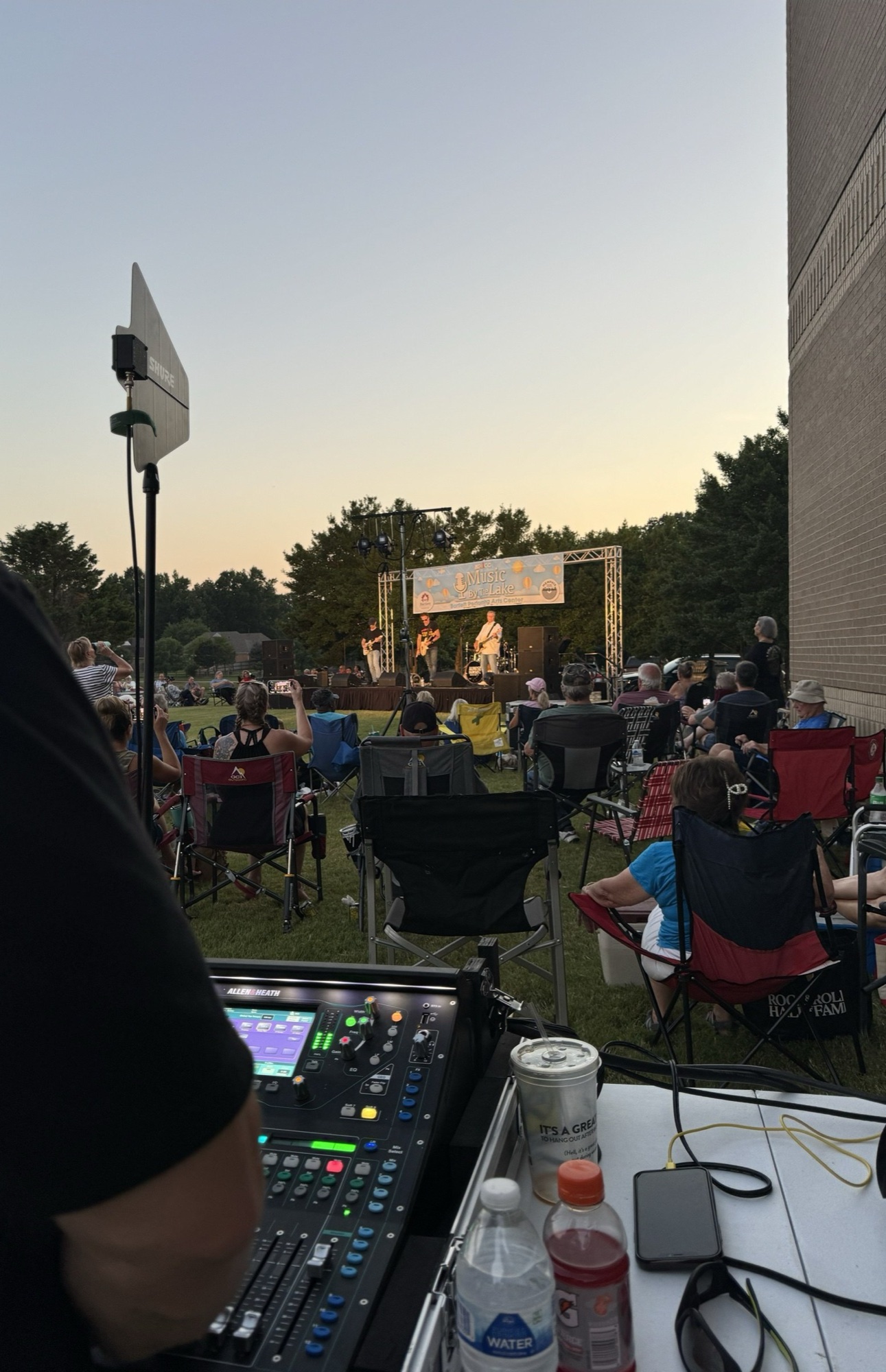
From front of house, you spend a lot of the show looking at the audience. You can see whether people are leaning in or looking at their phones, and whether they’re watching the stage or the exits. It’s the most honest feedback an event gets.
What it teaches you is that there’s no single formula for engaging content. Every event is for its audience, and every audience decides for itself what “engaging” means.
Three rooms, three kinds of content
Financial events run on slides. Investors, analysts, and finance teams came for the numbers, and the deck is the content. Fighting that is a mistake. The job is to make the numbers easy to take in:
- One chart per slide, with the number that matters called out.
- Labels and axes the back row can read.
- Consistent formatting from one presenter to the next, so the audience isn’t relearning the layout every 15 minutes.
- Confidence monitors for the presenters, so they talk to the room instead of turning around to read the screen.
Fundraisers run on stories. Donors give because something moved them, and that’s rarely a statistic. It’s a family, a patient, a student, a volunteer. The production’s job is to get out of the way of the story:
- Mix the audio on testimonial videos before show day, so the most important moment of the night isn’t too quiet or too loud.
- Give speakers who aren’t used to a microphone a mic that’s easy to use, and a quick rehearsal with it.
- Use lighting to bring the room down for the story and back up for the ask.
- Put the ask right after the story that earns it, not after dessert and three thank-yous.
Concerts run on energy. Nobody came for information. They came to feel something with a few hundred or a few thousand other people. Engaging here means:
- Sound that’s loud enough to feel and clear enough to enjoy, all the way to the back of the lawn.
- No dead air. Changeovers are planned, and walk-in and break music fits the crowd.
- Lighting that follows the music, especially as the sun goes down.
- A set list and a schedule that build, instead of peaking early.
Most events are a mix. A gala has a program, a story, and a band. A sales kickoff has numbers and energy. The trick is knowing which kind of content each part of the night needs.
Ask who’s in the room
Before anyone opens PowerPoint, answer a few plain questions:
- Did they choose to be here? People who bought a ticket came for something. People at a required meeting came because their calendar said so. The second group needs a reason to pay attention in the first two minutes.
- What kind of day have they had? The same people are a different audience at 9 AM with coffee than at 2 PM after a heavy lunch, or on the third day of a conference.
- What do they already know? Pitch it too high and you lose them. Pitch it too low and you insult them.
- Why is this event happening? To inform, to celebrate, to raise money, or to have a great night out. Content that fights the purpose of the event loses every time.
Design for the space
Whatever the content is, it has to work in the space the audience is in:
- Do the back-row test. If the last row can’t read it or hear it, it isn’t there for them. An old AV rule of thumb says the farthest seat should be no more than about six screen heights from the screen. In big rooms, that’s why side screens and bigger fonts both matter.
- Match the screen shape. Ask whether the screens are 16:9 or something wider, and build to that.
- Send playback files early, in the format your AV team asks for, with the audio already mixed.
- Pace it. Attention runs out. Break up long stretches with a video, a change of speaker, or a change in the room’s look.
Bring the production team in early
Your AV team watches a lot of audiences. Share the run of show, who’s attending, and what the event is for while the content is still being written. Then rehearse with the real slides, videos, and mics. It’s much easier to fix a slide on paper than a room that has already checked out.
The short version
The production carries the content. It can’t replace it. Figure out what your audience came for, whether that’s numbers, stories, or energy, and build the program around it.